Is your website ready for AI?

Test whether a public page can be retrieved, extracted and clearly understood by systems such as ChatGPT, Claude and Perplexity. You will receive an evidence-backed report with practical improvements.

No email address required. The scanner assesses one public page and its supporting files; it does not crawl your whole website.

What the scan measures

  • Access

    Whether AI retrieval agents are permitted to reach the page, and whether they actually can. Permission in robots.txt counts for nothing if bot protection refuses the request, and that refusal is usually nobody’s decision. We found this pattern in roughly one in five of the UK’s largest listed companies when we tested the scanner: bot protection refusing agents that the site’s own robots.txt explicitly permits.

  • Extractability

    Whether the content is in the HTML an agent receives. Many agents do not run JavaScript, so a page assembled in the browser can be close to empty from where they stand. This is the most common serious failure we see, and the most expensive to fix late. It is worth fixing before a website or platform build rather than after.

  • Structure

    Whether the page’s shape says what is a heading, what is the main content and what the page is called.

  • Machine-readable meaning

    Whether the page states what it is in structured data, rather than leaving an agent to infer it from the layout.

  • Trust signals

    Whether the page carries the provenance an agent looks for before repeating what it says: dates, attribution, a reachable about page.

A report your team can act on

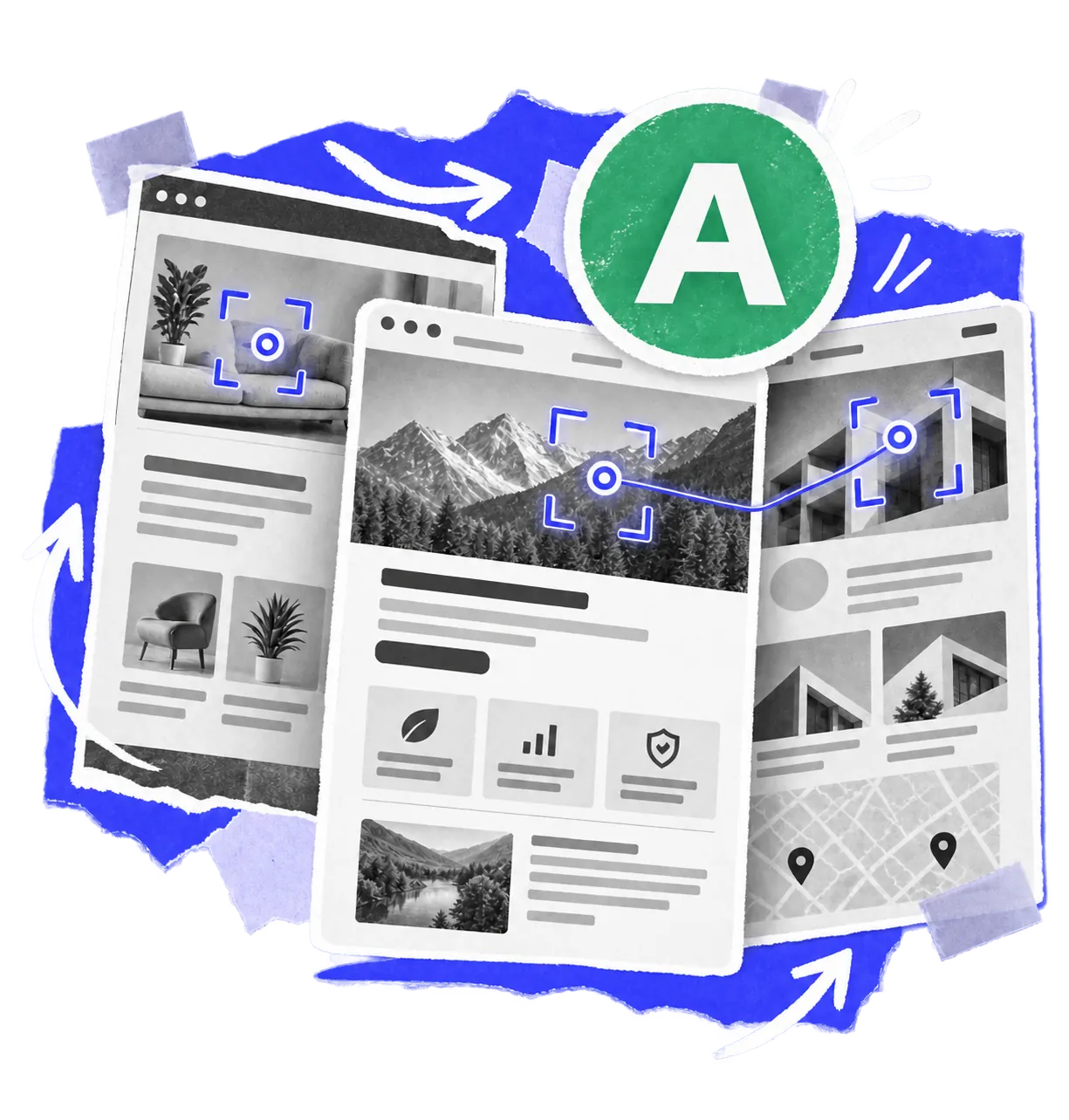
Every completed scan contains an overall band, a five-pillar breakdown and the evidence behind each applicable check. Failures and partial results include a suggested fix; anything the scanner could not verify is labelled rather than guessed.

  • A score out of 100 and an A–E readiness band
  • Prioritised technical opportunities
  • Observed evidence for every result
  • A shareable report link and print-friendly version

How it works

01

Enter a public page

Scan a homepage, service, product, article or campaign page. Readiness can vary between pages on the same website.

02

We run fixed checks

The scanner tests retrieval, server-delivered content, document structure, structured data and trust signals.

03

Get evidence and fixes

Your report shows what was observed, how each check was scored and what to improve next.

Why retrieval and structure matter

A webpage can be clear and convincing to a person while being difficult for an automated client to process. Important copy may only appear once JavaScript has run. A firewall may treat non-browser requests as suspicious. Headings, canonical addresses and structured data may be absent. Ownership, authorship and dates may be obvious to a reader and invisible in the markup.

None of this makes a website invisible to AI on its own, and fixing it guarantees nothing. But one thing is certain: if a retrieval agent cannot fetch your page, it cannot cite it. Whether it would have cited you is the uncertain part. The retrieval is not.

It helps to think of it in three stages.

Retrieval – Can the agent reach the page and its supporting discovery files at all? This is where stated policy and actual behaviour most often diverge. A robots.txt that welcomes every crawler counts for nothing if a CDN rule written years ago refuses anything that isn’t a browser.

Extraction – Does the response contain enough useful content to work with? Not every retrieval client executes page JavaScript fully, so important content that only appears in the browser may not be recovered. A page assembled in the browser can look immaculate to you and arrive as an empty shell.

Interpretation – Does the page identify its subject, its structure, the organisation behind it and the signals that let a reader judge the source?

Each stage depends on the one before it. A beautifully structured page nobody can fetch scores nothing that matters, which is why our scoring rubric weights access most heavily.
What the result does (and does not) mean

  • Technical readiness, not visibility

    The scan tests whether a page exposes signals that can help automated systems retrieve and interpret it. It does not measure whether an AI assistant currently cites, recommends or ranks the page.

  • One page at one point in time

    The result applies to the submitted URL when it was tested. Other pages, temporary bot protection and later website changes may produce different results.

  • Synthetic retrieval checks

    Requests present published crawler identities but do not originate from those services’ verified networks. They are practical access tests, not proof of how every genuine AI service is treated.

  • Unavailable evidence is labelled

    If enough evidence cannot be recovered, the report shows what was and was not verified. It does not turn unavailable checks into failures or invent an overall score.

AI readiness scanner FAQ

Ready to see what an AI client receives from your page?

Run a free scan, no account or email address required.